Some companies don't make the next round. We help them land — using AI built on Trademarkia's network of 125,000+ companies to match venture-backed startups with Fortune 500 acquirers, return capital to investors, and free founders to build the next thing.
The AI-first alternative to legacy assignees. Our buyer-graph engine replaces the manual rolodex; a live creditor portal replaces quarterly PDFs; capped, contingency-aligned fees replace the standard 12% transaction bonus and 24-month tail. Confidential, modern Assignments for the Benefit of Creditors and seven adjacent wind-down services.
A startup that runs out of runway still has value left — patents that mean something to a strategic, a team that means something to an acqui-hirer, a brand that means something on a balance sheet. The job at the end isn't to apologize. It's to make sure that value reaches the people who funded it, the people who built it, and the people who will carry it forward.
The legacy practice runs the same playbook today that it ran in 1995: a rolodex of corporate-development contacts, paper documents, and quarterly PDF statements.
We rebuilt that playbook on AI infrastructure — not because the technology is novel, but because the process needed it. Six AI systems, trained on Trademarkia's portfolio of 125,000+ IP filings and a decade of corporate-development pattern data, run inside every Graveyard.vc engagement.
Your runway, debt stack, cap table, IP, and likely-buyer universe go in. A modeled recovery range comes out — before our first call ends. You walk in unsure. You walk out with a number.
Legacy: 4–6 weeks of consultations and email threads before a structured estimate.
Eight years of acqui-hire and patent-transfer pattern data, mapped to corporate-development contacts, M&A history, and current acquisition appetite. Targeted outreach in days, not weeks.
Legacy: Sequential rolodex outreach, manual follow-up, weeks per buyer cycle.
Trained on Trademarkia's 125,000+ trademark portfolio, USPTO transaction data, and comparable IP sales. We anchor on real numbers, not the seller's wishes or a buyer's lowball.
Legacy: Asset value is a single line item on a residual-asset spreadsheet.
General Assignment, Board Resolution, Stockholder Consent, Interested Party Declaration, Patent Assignment, Trademark Assignment, 401(k) trustee appointment, Compensation Letter — all AI-drafted to your facts, attorney-reviewed before execution.
Legacy: Manual templates, days to weeks of back-and-forth per document.
Creditors submit Proofs of Claim through a portal. AI verifies against books and records. Statutory priority distribution is modeled live. Every dollar in, every dollar out, on a single auditable ledger.
Legacy: Quarterly statements. PDFs. Phone calls.
ABC law differs meaningfully by state: court oversight, bond requirements, preference recovery, appraisal duties, time limits. We model the variation programmatically so the wind-down is defensible in every jurisdiction it touches.
Legacy: Primarily California-focused practice, manual handling for out-of-state matters.
Most insolvent venture-backed companies don't actually need a Chapter 7. They need someone with the discipline to structure the right wind-down for their facts. We offer seven adjacent service lines so the engagement matches the situation — not the other way around.
Our flagship practice. The Gold Standard for ABCs in the age of AI — the modern alternative to legacy assignees for venture-backed companies.
Read more II.Pre-wind-down strategy, recovery modeling, cap-table scenario analysis, and creditor negotiation support — for boards that want options before they need them.
Read more III.Post-bankruptcy and post-merger trust administration — managing residual assets, claims, and distributions on a multi-year horizon.
Read more IV.State and federal court-appointed receivers for distressed companies, foreclosure proceedings, and contentious shareholder situations.
Read more V.UCC Article 9 secured-creditor sales — the fastest available path to clean title for senior lenders ready to monetize collateral.
Read more VI.Operating wind-downs that keep the lights on long enough to maximize value — service contracts honored, customers transitioned, IP sold as a going concern.
Read more VII.Patent and trademark sales, licensing structures, and enforcement — including for healthy companies that simply have unused IP on their balance sheet.
Read more —Tell us where you are. We'll tell you which service line — if any — is the right tool.
Confidential intakeBy the time a venture-backed company is down to its last quarter of runway, three things are almost always true: the CEO knows it, the lead investor suspects it, and nobody wants to be the one to say it out loud. The result is usually a chaotic, unflattering wind-down handled by someone whose business model was built thirty years ago. We think Silicon Valley deserves better.
For three decades, ABC sales for venture-backed companies in Silicon Valley have been dominated by a single legacy assignee. Their term sheets routinely take 12% of every transaction plus a $35K up-front advisory fee. There has been no real alternative.
By the time most CEOs reach out, the board meeting is already on the calendar. A confidential first call — weeks before any vote — is the difference between a controlled landing and a crash. We let founders model the outcome before they have to defend it.
Once on the original mark. Again on the wind-down — when the 12% transaction bonus, the $35K up-front, and the 24-month tail collide with liquidation preferences and a $10M check returns $200K instead of the $2M an efficient process would have produced.
Most of these companies aren't really dying — they're being absorbed. Ten engineers and a working model end up at a strategic within sixty days. But without a structured acqui-hire process, the patents and trademarks that should anchor the deal are left on the table.
Every line below comes from the standard incumbent term sheet — pulled from real engagement letters, not marketing material.
Source: standard legacy-assignee engagement letter terms. Graveyard.vc actual published terms. See our sample engagement letter for the full text.
We don't sell options off a menu. The Triage AI memo assesses the estate — liquidable assets, debt stack, IP, and timeline — and places the engagement in the appropriate tier. The website publishes the framework so boards, founders, and lead investors can see what to expect before the first call. Comparison baseline throughout: the legacy assignee's $35K up-front + 12% transaction bonus + 24-month tail.
For smaller estates that need predictable cost, a clean process, and quick close — including pre-pack situations where a strategic buyer is identified at intake.
Right-sized for the estate. On a $200K asset sale, total fee is $46K vs the legacy practice's $59K — about 22% lower with no tail.
For engagements where fiduciary alignment matters more than fee certainty. We earn nothing until creditors clear the agreed threshold.
The board's strongest fiduciary record. We bear the risk; creditors see the alignment in the engagement letter itself.
For large estates with complex asset bases — diversified IP portfolios, multi-state operations, or contested situations — where the structured marketing process produces the best recovery.
On a $5M sale, total fee is $530K vs the legacy practice's $635K — about 17% lower, with no 24-month tail and mutual indemnification.
Most engagements come to us through one of three channels: founders ready to be proactive, VC firms with a difficult portfolio situation, or the Silicon Valley law firms representing them. All three conversations are confidential, fast-moving, and structured to protect everyone's optionality.
For the CEO who can see the runway ending and wants to land the plane with dignity — and for directors who need a process that protects them from successor-liability claims while doing right by employees and creditors. Early conversations are confidential. The Triage AI memo gives a clear-eyed assessment in one business day, with no obligation to engage.
For venture firms, syndicates, family offices, and angel groups whose portfolio companies need experienced operational and fiduciary execution before payroll fails or vendors lock out. We work directly with VC ops partners on portfolio-level coordination — discreet, fast-moving, protective of LP interests and firm reputation.
For startup and venture counsel representing founders, boards, or investors that need experienced operational and fiduciary execution alongside the legal work. Engagements are conflict-clean. You handle the legal record. We handle the operational execution. Ideal for failed financings, governance disputes, distressed acqui-hires, and runway exhaustion.
None of these is unusual. All of them get worse if left unmanaged. Early action creates options.
A wind-down is the last act of leadership a founder gets. The board meeting that ends the company is also the one that decides whether anyone will fund the next one. We exist so that act can be done with care.
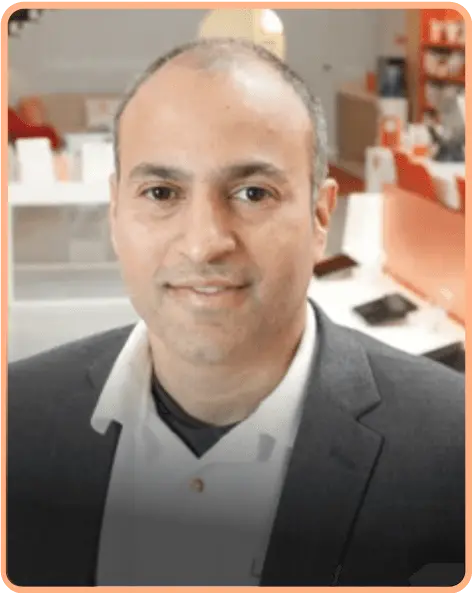
Jonathan Lilo Bitumba · Lead, Graveyard.vc · Menlo Park
Led from Menlo Park by a small team that has built, financed, and dissolved companies before. The lead practitioner came up through a family that migrated from the DRC to South Africa and built multi-generational SME businesses in trading, hospitality, and services. The founder finished college and went on to law school only after his own family's retail business wound down in Phoenix. Both ends of the wind-down — the operator side and the practitioner side — sit on the same team.
If you are a founder, board member, lead investor, or company counsel, you can use this form to start a confidential conversation. No information leaves Graveyard.vc. No board notice is triggered. No filing is made. We respond within one business day with a private call invitation and a Triage AI memo.
Graveyard.vc is one of three sister practices serving venture-backed companies across the lifecycle — formation through wind-down.